
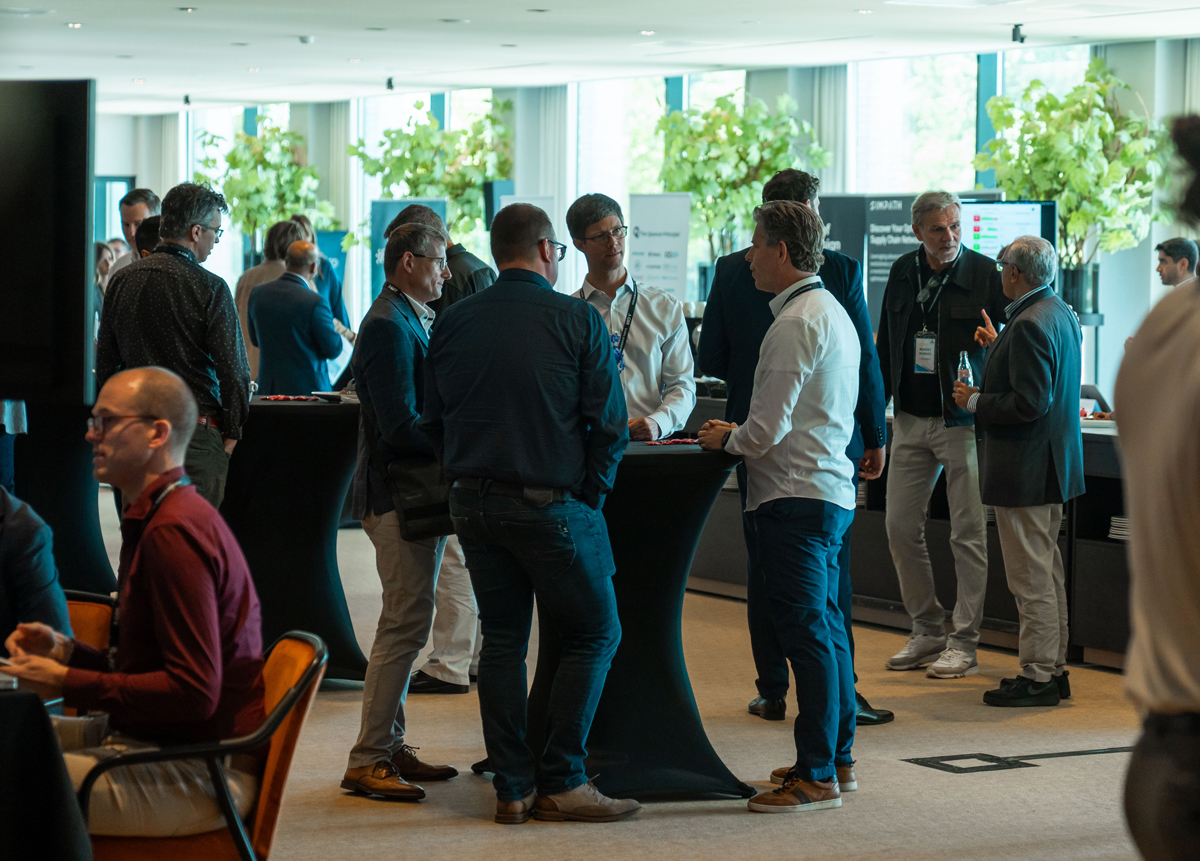
On 18–19 June, GBR hosted SmartWorX 2026 in Amsterdam, bringing together C-level manufacturing executives, plant operations directors, and industrial tech strategists for two days of peer-led collaboration and benchmark setting. Following directly after discussions on sustainable operations, the summit turned its focus to operational execution, exploring how industrial enterprises can overcome scaling bottlenecks and deploy smart manufacturing frameworks to
achieve long-term resilience.
CORE INSIGHTS & STRATEGIC IMPERATIVES
1. Demystifying and Scaling Practical AI on the Plant Floor
While artificial intelligence continues to dominate corporate strategic agendas, discussions at SmartWorX shifted decisively from speculative hype to practical execution. Senior leadership emphasized deploying “Applied AI” and targeted machine learning models designed around concrete shop-floor metrics—specifically lowering energy consumption, enhancing predictive maintenance accuracy, and accelerating digital tool adoption across assembly lines.
2. Transitioning to Cloud MES for Greater Agility
Replacing legacy, localized manufacturing execution architectures with modern agile frameworks
remains a top operational priority. Discussions highlighted how modern Cloud-based Manufacturing
Execution Systems (Cloud MES) successfully bridge high-level data processing with front-line operators, delivering the compute capacity required to scale industrial operations seamlessly across multiple facilities.
3. Embracing Data Mesh Architecture to Eliminate Silos
Industrial giants are rapidly abandoning rigid, monolithic data architectures in favor of decentralized
models. A central takeaway was the strategic adoption of Data Mesh principles—treating industrial data as a distinct product owned by local domain teams. This shift decentralizes governance, dramatically enhances real-time quality control, and accelerates localized predictive analytics.
4. Navigating Workforce and Supply Chain Bottlenecks
Digital transformation cannot succeed without active workforce enablement. Industry leaders addressed the critical challenge of driving digital adoption amid shifting labor demographics. Discussions focused on building intuitive user interfaces for plant-floor operators and establishing continuous upskilling initiatives to maximize the operational yield of newly deployed software assets.
5. Open Dialogue in a Collaborative Environment
Operating under a closed-door setting allowed executive participants to move beyond polished public relations messaging. Through candid “executive huddles,” leaders openly addressed shared operational friction points, failed software pilot programs, and emerging cybersecurity vulnerabilities within the evolving Industry 4.0 ecosystem.
“Moving from speculative AI pilots to decentralized, domain-driven operational agility is the defining benchmark for Industry 4.0 leadership.”
Strategic Outlook for Executive Leadership
The findings from SmartWorX 2026 highlight a mature stage in digital transformation: one defined by pragmatic deployment rather than experimental adoption. For executive leadership, success in the next phase of manufacturing excellence depends on pairing advanced technologies—such as Cloud MES and Data Mesh—with user-centric workforce design. Organizations that prioritize actionable data over central silos and upskill their workforce alongside technology investments will establish a decisive competitive edge.

